Oil, war and the quiet rise of the digital dollar
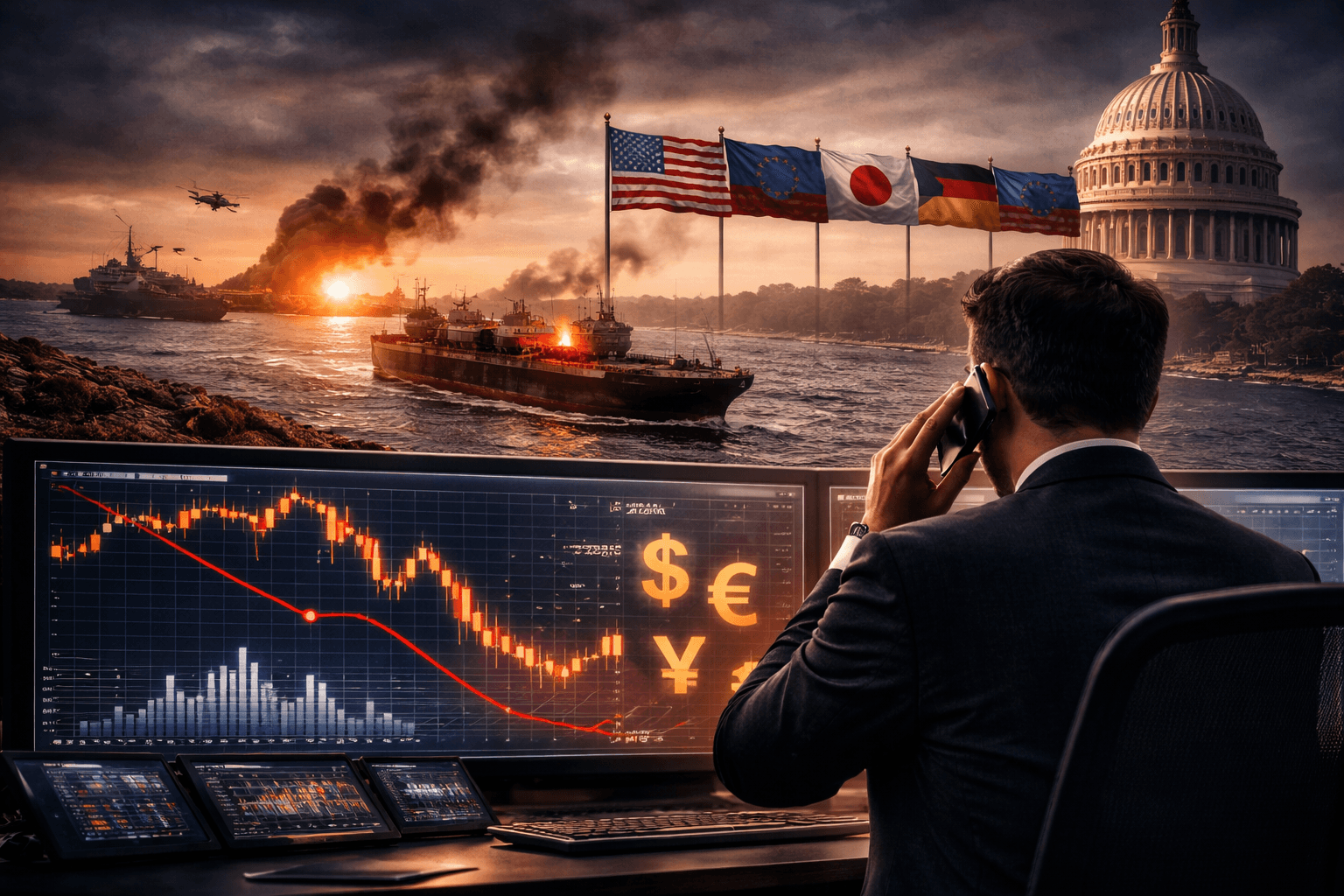
Markets no longer trade on supply and demand. They trade on fear. There are moments when geopolitics, economics and psychology converge into a single point of tension. Where decisions made by a handful of countries — or the presence of a few mines in a narrow strait — determine the course of billions of people who are entirely unaware of the threat. This is one of those moments.
What we have witnessed over recent weeks is not a temporary disruption in an otherwise stable market. It is a structural shift in how risk is priced, how capital behaves under pressure, and how the geopolitical architecture of the global economy is realigning. For investors, it is essential not to underestimate this — but equally not to dramatise it. A clear-headed analysis is necessary.
The Strait of Hormuz: where the fate of the global economy is decided
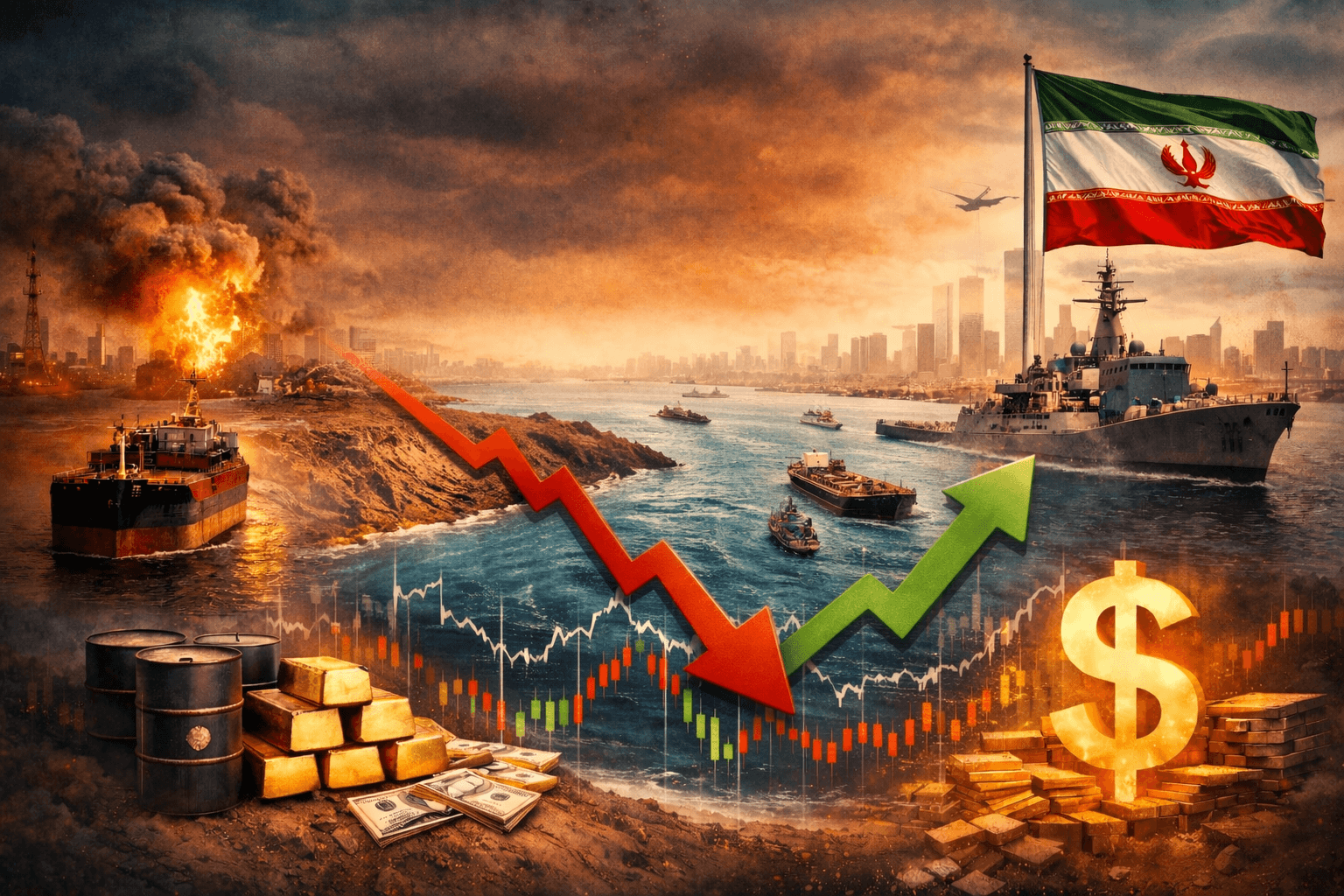
There is a place on the world map that few people could point to, yet whose condition influences the energy prices they pay every single day. The Strait of Hormuz, a narrow passage between Iran and Oman, in places barely forty kilometres wide, is the artery of global oil trade. A substantial share of the world's energy flows passes through here.
When the first reports emerged of mines being laid in these waters, markets responded immediately and with unprecedented force. Crude oil saw intraday moves of nearly thirty percent, a historical record for a market of this scale. By comparison, the oil crisis of 1973 took weeks to produce comparable volatility. This happened within hours.
The physical threat is only one dimension. The real impact lies in what that threat represents: the possibility that one of the world's busiest shipping routes could be abruptly shut down. Insurers are pulling back. Captains are refusing to sail without military escorts. And once ships stop moving, supply stops flowing. That touches virtually every sector dependent on oil: fuel, food, plastics, medicines, clothing. A disruption at Hormuz does not hit one industry. It hits the entire system.
Day twelve of a crisis the world has yet to fully grasp
We are still in the early stages, yet the consequences are already visible worldwide. Multiple countries have begun fuel rationing. Vietnam is advising citizens to work from home. Petrol prices are rising at a moment when inflation in many Western economies was already fragile. Flights are being cancelled and refineries across the Gulf region are temporarily shutting down.
This is a classic supply shock, but in its most acute form. Supply shocks do not behave linearly. They start small, but once confidence breaks, escalation can become exponential. Not because of the physical situation itself, but because of the expectations it sets among policymakers, businesses and consumers.
The real danger is not the explosion, but the fear that follows. When ship captains no longer trust Hormuz, they don't sail. When refineries stop purchasing oil, they stop producing. When consumers anticipate scarcity, they start stockpiling. Each step amplifies the next. That is how a regional conflict becomes a global economic crisis.
The geopolitical chessboard: Iran, China and the bill for Washington
To understand the situation, we need to look at the players and their interests. Iran finds itself in a paradoxically strong position. Every week of crisis raises the political pressure on Washington. The midterms are approaching, and every additional dollar at the petrol pump translates into domestic discontent. Iran does not need to win. It simply needs to play for time.
China is playing a different game entirely. While the world struggles with oil supply, Beijing sits on a strategic reserve estimated at forty million barrels. China can wait, observe and act at the right moment, or choose not to act at all. It is the kind of strategic patience that Western economies can rarely afford.
The United States has by now spent billions on munitions and operational costs. That spending must be financed. In an economy already running a substantial deficit, that means more government bonds coming to market. Greater supply pushes yields higher, unless demand keeps pace. Higher yields feed through into mortgage costs, corporate financing and economic growth.
Some analyses suggest Washington is betting on a larger prize: control over Iranian assets estimated at nearly thirty trillion dollars. If accurate, that could justify the cost of the conflict. But it remains an enormous gamble, with real and daily consequences in the meantime.
The quiet revolution: the digital dollar gains ground
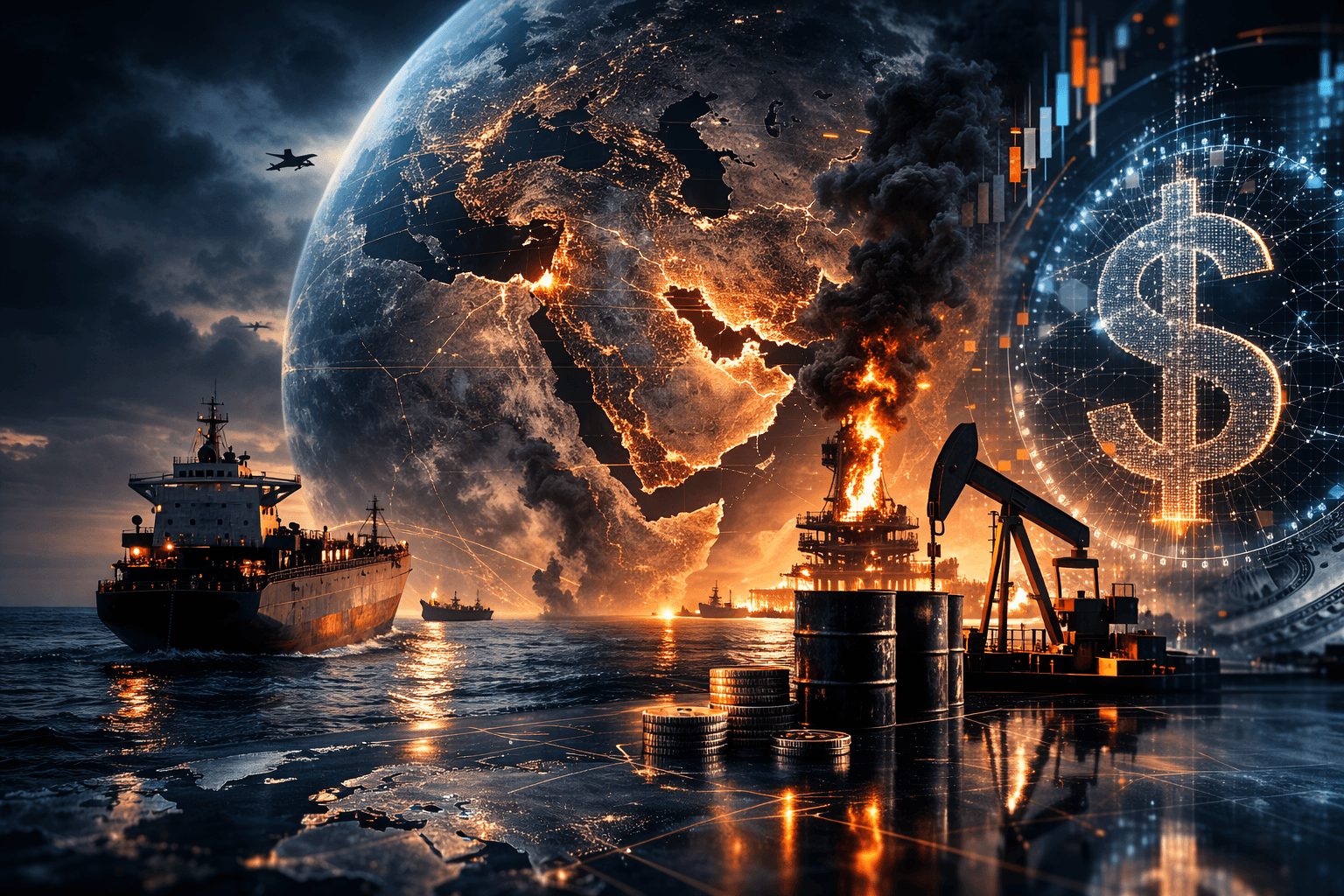
While oil tankers navigate risk and geopolitical strategies are redrawn, a different revolution is unfolding in the background, less visible but potentially just as consequential. Stablecoins, digital tokens pegged to the US dollar and backed by US government bonds, are growing at a pace that most traditional financial players are still underestimating. They are becoming the new digital infrastructure for global transactions: fast, cross-border and free from the friction of conventional banking.
What is particularly striking is that even countries politically motivated to distance themselves from the dollar are, in practice, making extensive use of dollar-pegged tokens. The much-discussed de-dollarisation is, in reality, looking more like a digital re-dollarisation.
Coinbase CEO Brian Armstrong put it plainly: AI agents will soon execute more blockchain transactions than humans. An AI agent cannot open a bank account, but it can open a crypto wallet. That creates a constant, automated flow of digital dollars through the global economy. The infrastructure of the future is being built right now, and the dollar is already at its centre.
It is no coincidence that the United States is accelerating work on a regulatory framework for crypto. This is not purely about technology or consumer protection. It is about embedding the dollar into the financial rails on which the next era of the global economy will run.
What this means for investors
In times of extreme uncertainty, the instinct is often either to overtrade or to do nothing at all. Both reactions are understandable, but neither is optimal. What markets demand right now is not timing, but orientation: understanding which scenario we are in and how a portfolio relates to it.
If tensions escalate further and tanker traffic through Hormuz is disrupted for an extended period, oil volatility and inflation will remain elevated. That weighs on consumers, but creates opportunities in energy, commodities and inflation-linked instruments. If traffic normalises, the risk premium embedded in oil prices could evaporate quickly and markets may recover sharply. Those sitting on the sidelines at that moment will miss the move.
If stablecoins continue their growth trajectory, the digital dollar will consolidate its role as the world's reserve currency, independent of geopolitical noise. And if military spending remains high and yields continue to rise, the balance between equities and bonds will shift. The classic 60/40 portfolio will come under pressure.
Caution as strategy
Panic and uncritical optimism are equally unhelpful responses in periods of heightened market uncertainty. The weeks ahead may prove formative for the economic conditions of the years that follow. The risks outlined here touch the foundations of energy supply, monetary confidence and the broader dynamics of the global economy. In such an environment, it is important that investors remain alert, maintain a clear framework and have the discipline to adhere to it, even when the headlines are loud.
It is for investors themselves to align their positions with their own risk profile, to avoid following market moves they cannot explain, and to distinguish between temporary volatility and structural change. As the situation continues to unfold, greater clarity will emerge. Until then, a cautious stance can be a meaningful source of stability and perspective.
This document is intended for informational purposes only and does not constitute investment advice. AP Capital Partners accepts no liability for decisions made on the basis of this document.