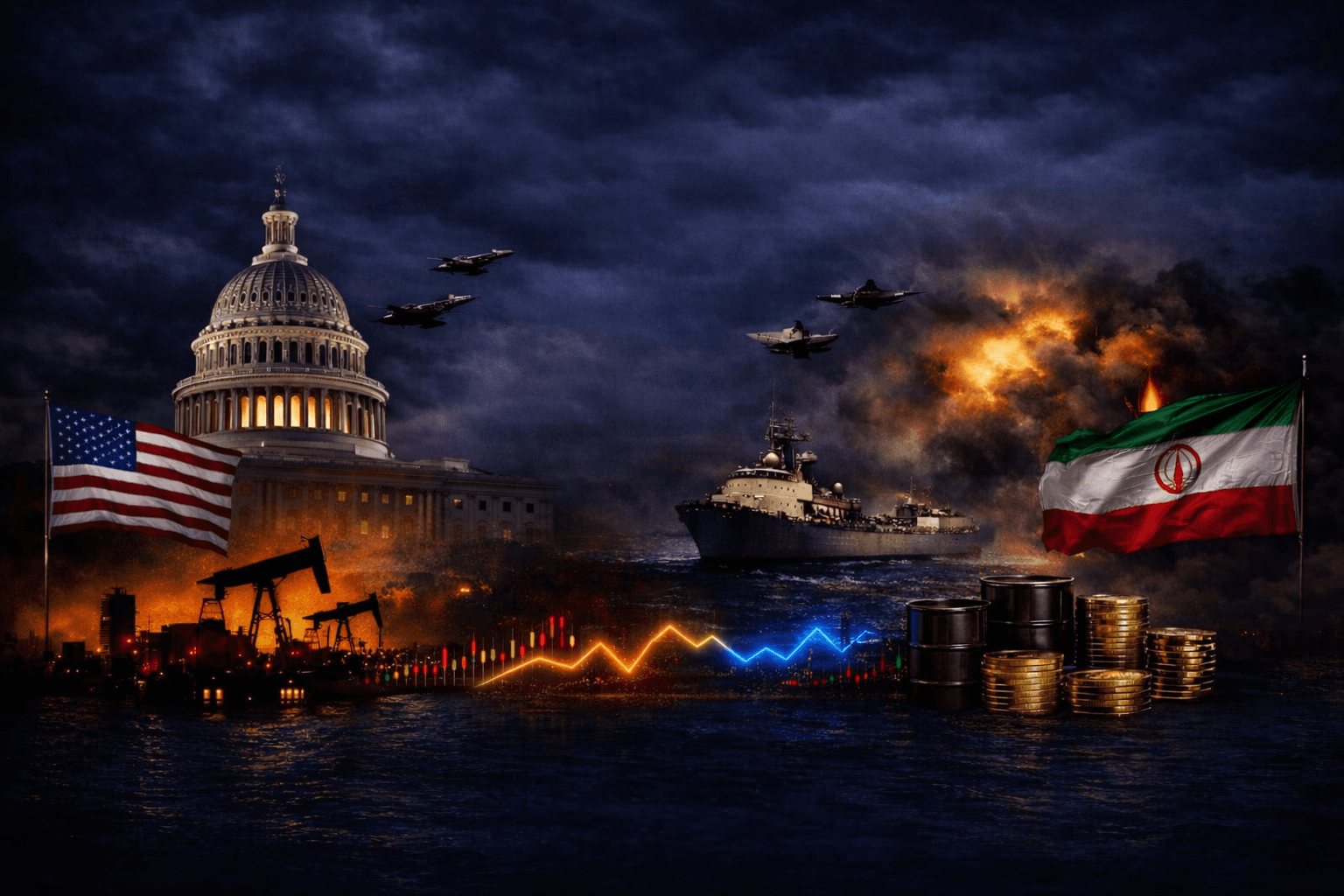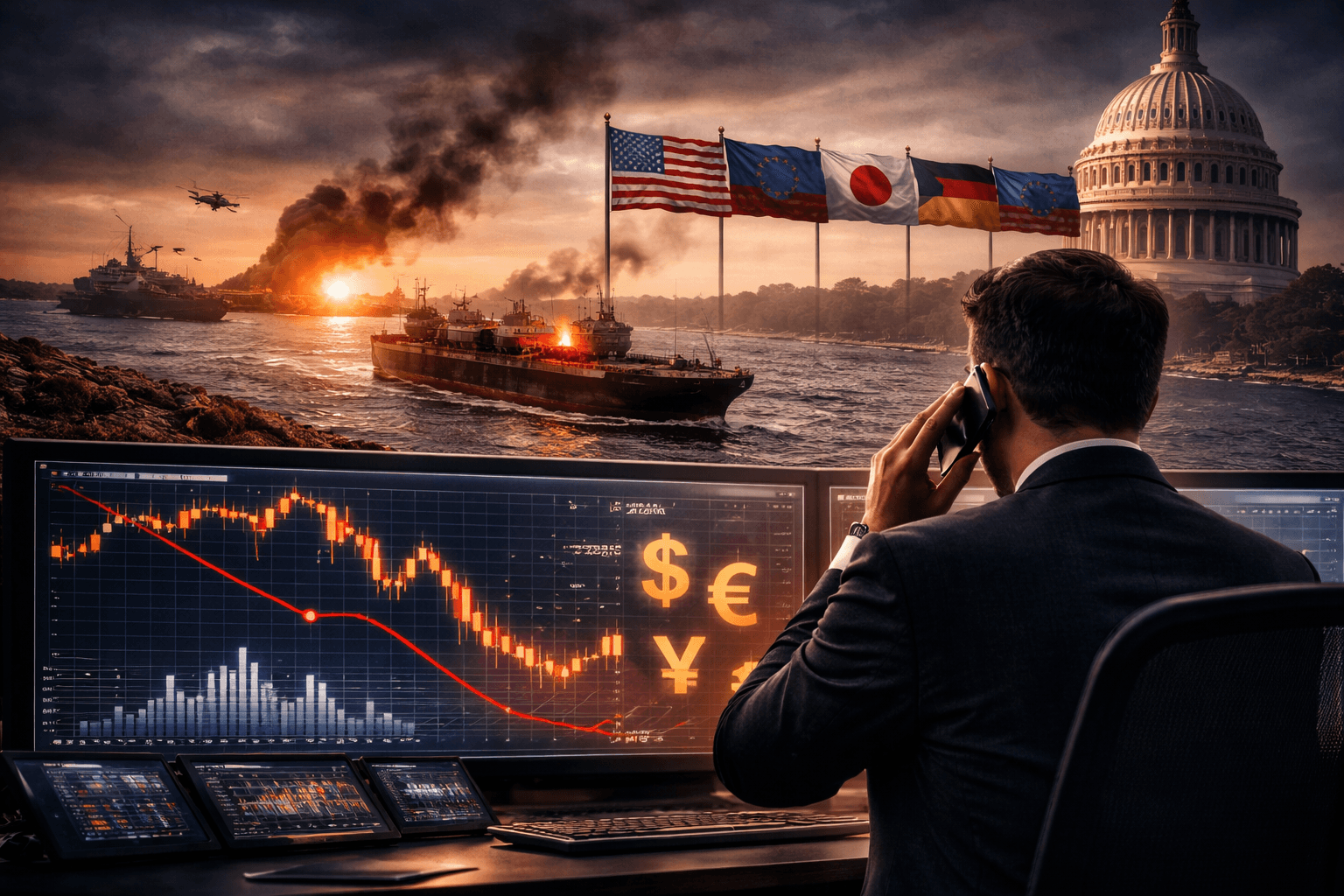
Financial markets continue to face an exceptionally complex macro-economic landscape. While geopolitical headlines generate temporary movement, underlying confidence has been structurally weakened. Ceasefire reports can move markets significantly within hours, yet fail to resolve the fundamental tensions at play. As long as a durable de-escalation remains absent, market dynamics will stay reactive and difficult to capitalise on.
Geopolitical Tension and the Impact on the Global Economy
The situation surrounding Iran presents a surface layer of talks and proposals, while underneath, troop movements are intensifying, demands are hardening and control over the Strait of Hormuz remains entirely unresolved. This is no longer a matter of patience and waiting — economies worldwide are firmly in a phase of active crisis management.
The strategic significance of the Strait of Hormuz cannot be overstated. Uncertainty over energy flows translates directly into structural inflationary pressure, not temporary but sustained. Delays in transportation, rising insurance costs and restricted transit capacity are feeding through into virtually every sector of the real economy.
Major regions worldwide, including Australia — which imports approximately 90% of its fuel — and large parts of Asia, are already implementing measures to preserve fuel reserves. When such recommendations are issued, the severity of the situation speaks for itself. A fuel shortage inevitably leads to disruptions in trade and transportation, and consequently to scarcity in food and other essential goods. The resulting price pressure extends well beyond a classical supply issue.
At the same time, the United States has accumulated record levels of debt while spending billions on sustained military involvement. The political urgency to reach a resolution is therefore mounting rapidly, with the midterm elections serving as an unavoidable horizon.
Should ceasefire talks gain credibility, risk premiums could ease quickly, though structural tensions will not dissolve overnight. Should negotiations break down or demands become public, energy markets will likely reprice higher once again. As long as the Strait of Hormuz remains uncertain, costs will stay elevated regardless of further escalation.
Rotation Within Equities: The Market No Longer Moves as One
Alongside geopolitical developments, a quiet but significant shift is taking place within equity markets. The correlation between mega-cap technology and the broader index is weakening. Where large technology companies were once the reliable engine of index strength, this can no longer be taken for granted.
Energy and defensive sectors are holding up relatively well, while growth sectors are struggling to maintain momentum. The decoupling of the so-called Magnificent 7 from broader S&P 500 price action is a development that warrants close attention. A previously reliable signal is becoming questionable, and in a market already burdened by diminished confidence, this raises the risk of abrupt reversals.
Should rates remain elevated, pressure on rate-sensitive sectors will persist. Should oil remain volatile, energy-related positions will retain relative support. Should ceasefire headlines hold, technology may stabilise, but only if rates follow suit.
Bond Market: A Structural Brake on Recovery
The bond market currently represents one of the most concerning factors in the macro picture. Long-term rates remain high even after positive geopolitical developments. Expectations surrounding future rate cuts have shifted materially, and markets are pricing in a prolonged period of tighter financial conditions.
This feeds directly into mortgage rates and broader financial conditions. A feedback loop has emerged: energy prices drive inflation, inflation keeps rates high, and high rates place pressure on risk assets and highly valued positions. The bond market is therefore acting as a constant brake, even when headlines turn positive, preventing sustained upward movements from taking hold.
Should rates hold at current levels, financial conditions will remain tight. Should energy prices rise again, inflation expectations could push rates higher still. Should confidence in a ceasefire grow, rates may decline, but only if inflation risk genuinely recedes.
Cross-Asset Implications
In equities, moves may appear strong while underlying participation remains uneven. In currencies, rate expectations and energy dependency are directing capital flows. Hard assets are functioning in this environment as protection against instability rather than panic trades.
Conditions to Monitor Closely
Whether ceasefire talks gain credibility or fall apart. Whether oil remains elevated even on positive news, as an indication of structural risk. Whether rates stay high despite improving headlines, pointing to persistent inflation concerns. Whether equity moves hold rather than reversing sharply.
Conclusion
Markets are not struggling due to a lack of understanding — they are struggling because the number of possible outcomes is too large to commit to. Relief can emerge quickly but rarely lasts, as the underlying issues remain unresolved. Meanwhile, the bond market continues to provide a persistent headwind, regardless of geopolitical tone.
The combination of geopolitical uncertainty, structural inflationary pressure and narrowing market leadership is creating an environment that reacts quickly but commits slowly. The most favourable outcome for virtually all asset classes at this moment is a swift and lasting end to the conflict. Not because a worst-case scenario is certain, but because markets no longer have sufficient confidence to ignore the possibility.